
Executive Function Coaching for Elementary School Students

The reaction was three sizes bigger than the problem. Again.
You already know that, and knowing it doesn’t make it any easier when it’s happening in the kitchen at 6pm. At this age, most of what parents are dealing with doesn’t look like a school problem. It’s the child who falls apart when the plan changes, who can’t get started on something that takes four minutes, or who holds it together all day and unravels the second they walk in the door.
Charts and consequences sometimes help a little, but usually they don’t hold, because the reaction isn’t the actual problem. Your child is doing the best they can with the skills they have right now, and those skills just aren’t there yet.
We’re ADHD-trained coaches who specialize in working with kids, teens, and young adults, and between the three of us we have more than 60 years of professional experience. We’ve worked with many children at exactly this stage, and teaching those skills is what we work on.
Where we start
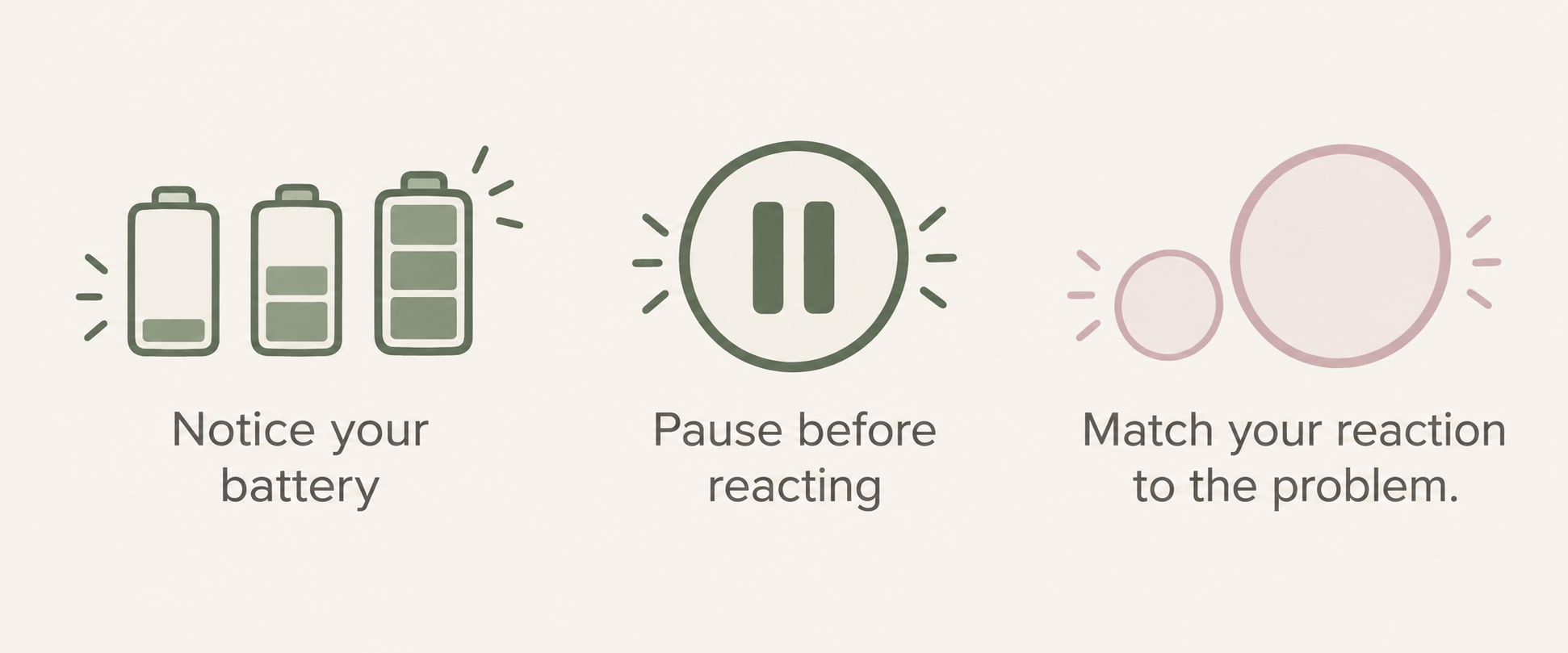
Before a child can change what they’re doing, they have to notice what they’re doing. A child in the middle of a meltdown usually can’t tell you they’re overwhelmed, because all they know is that something feels terrible. So we start there.
What does your body feel like right before you lose it?
Where’s your battery right now?
Is this a small problem or a big one, and does your reaction match?
Once a child can notice what’s happening, they can start doing something about it. From there we build the rest, including pausing before reacting, recovering when things go sideways, getting started on something hard, and rolling with a change in plans.
Parents are a vital part of coaching at this age!
At the elementary level we only offer Full-Time coaching, because coaching a young child doesn’t work without you. Your child isn’t going to take a strategy from a Tuesday session and apply it during a Thursday morning meltdown on their own, and you’re the one who’s there.
So every package includes weekly collaboration with you, with the same language and the same tools, so you know what to say in the moment instead of guessing.
Start with a conversation
If you’re not sure whether coaching is the right fit, that’s a good reason to book a consultation, not a reason to wait. You can pick the coach who seems like the right match for your family and schedule a free 30-minute Zoom call with them directly. You’ll tell them what’s going on with your child, they’ll explain how coaching actually works, and you can ask whatever you want.
It isn’t a sales call or a coaching session, and nobody is assessing your child or trying to close you. It’s a conversation with a real person about whether this makes sense for your family, and if it doesn’t, that’s a fine outcome.